








Strategic Location
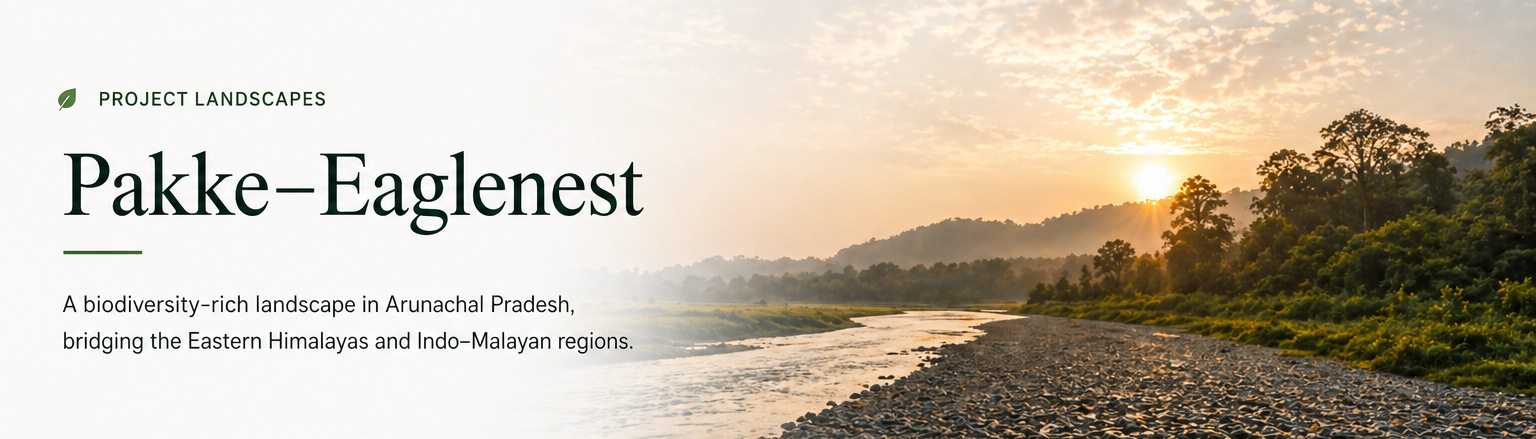
Pakke Tiger Reserve is located in the East Kameng district of Arunachal Pradesh. The landscape is strategically positioned and bordered by Tenga Reserve Forest (North), Doimara Reserve Forest and Sakteng Wildlife Sanctuary in Bhutan (West), Nameri National Park and Tiger Reserve in Assam (South), and Papum Reserve Forest (East).

Diverse & Extensive Habitat
The landscape comprises Pakke Tiger Reserve (1,377 km²), Sessa Orchid Sanctuary (100 km²), and Eaglenest Wildlife Sanctuary (217 km²). It spans a wide altitudinal range—from lowland foothills in Pakke to elevations of about 3,000 m in Eaglenest—supporting a rich diversity of ecosystems and habitats.

Ecological Significance
Situated at the transition between the Indian and Malayan eco-regions, the landscape exhibits high species diversity and endemism. This ecological gradient supports a significant portion of the Eastern Himalaya’s biodiversity, making it one of the most biologically rich landscapes in the region.

Strategic Location
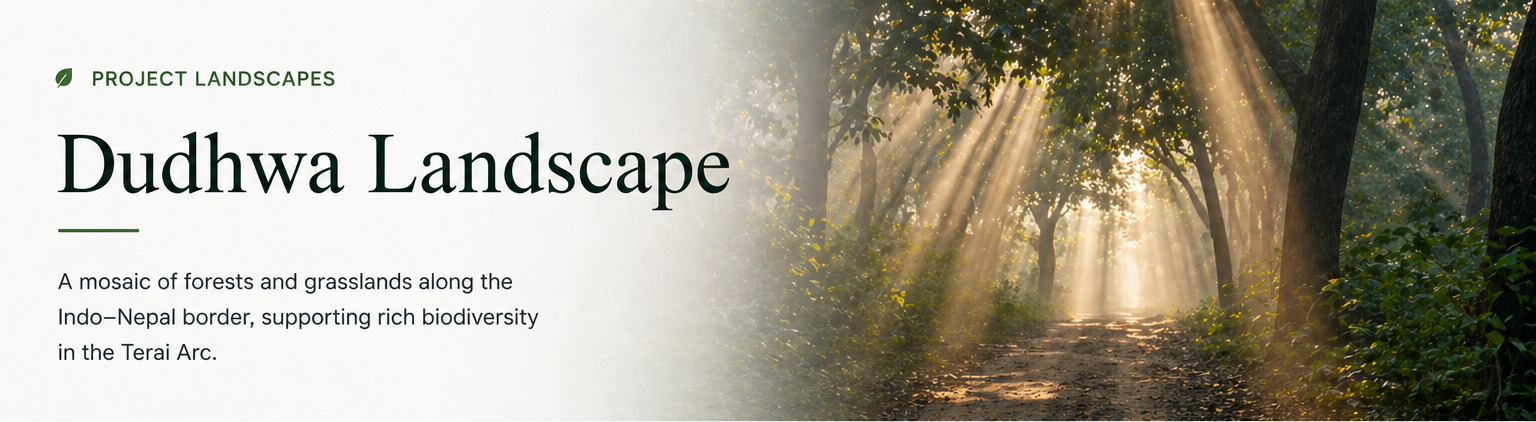
The Dudhwa landscape lies in eastern Uttar Pradesh, primarily across Lakhimpur Kheri and Bahraich districts. It forms part of the Indo–Nepal border, with adjoining habitats extending into Nepal, making it a critical transboundary conservation area.

Diverse & Extensive Habitat
The landscape comprises three key protected areas—Dudhwa National Park, Kishanpur Wildlife Sanctuary, and Katarniaghat Wildlife Sanctuary. Together, they form a connected mosaic of forests, grasslands, and wetlands embedded within an agricultural matrix dominated by sugarcane and paddy fields.

Ecological Significance
Positioned within the Terai Arc Landscape, Dudhwa supports high biodiversity and provides vital habitat for a range of species. Its mix of habitats and cross-border connectivity enhances ecological resilience and strengthens conservation outcomes in the region.
Strategic Location
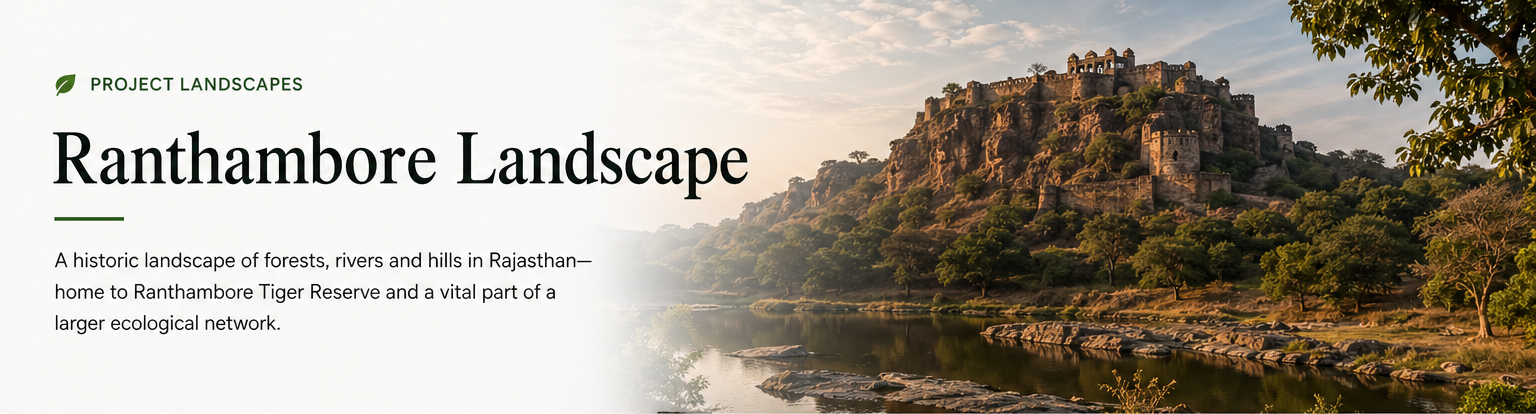
Ranthambore Tiger Reserve (RTR) is located in south-eastern Rajasthan at the junction of the Aravalli and Vindhyan hill ranges. It spans across Sawai Madhopur, Karauli, Bundi, and Tonk districts. The landscape is connected to several important protected areas, including Sariska Tiger Reserve (north), Kuno Wildlife Sanctuary and Madhav National Park (east), and Mukundara Hills Tiger Reserve (south-west), forming part of a broader conservation network
Diverse & Extensive Habitat
The landscape is characterized by hilly terrain with steep escarpments, flat plateaus (locally called dang), and narrow gorges (khoh). The Banas and Chambal rivers are the main river systems, shaping ravines and supporting diverse habitats. Numerous water bodies (talabs/lakes) within the reserve provide critical resources and act as key activity zones for wildlife, including ungulates and large carnivores.
Ecological Significance
Declared a Tiger Reserve in 1973 under Project Tiger, Ranthambore is a vital habitat for tigers and associated species. Its unique combination of dry forests, river systems, and rugged terrain supports rich biodiversity. The Chambal River, forming the eastern boundary, further enhances ecological connectivity and contributes to the conservation of freshwater fauna.